


Product Description: High-Efficiency Separator HEPA Filter for Laboratories and Pharmaceutical Industries
I. Product Definition and Core Functions
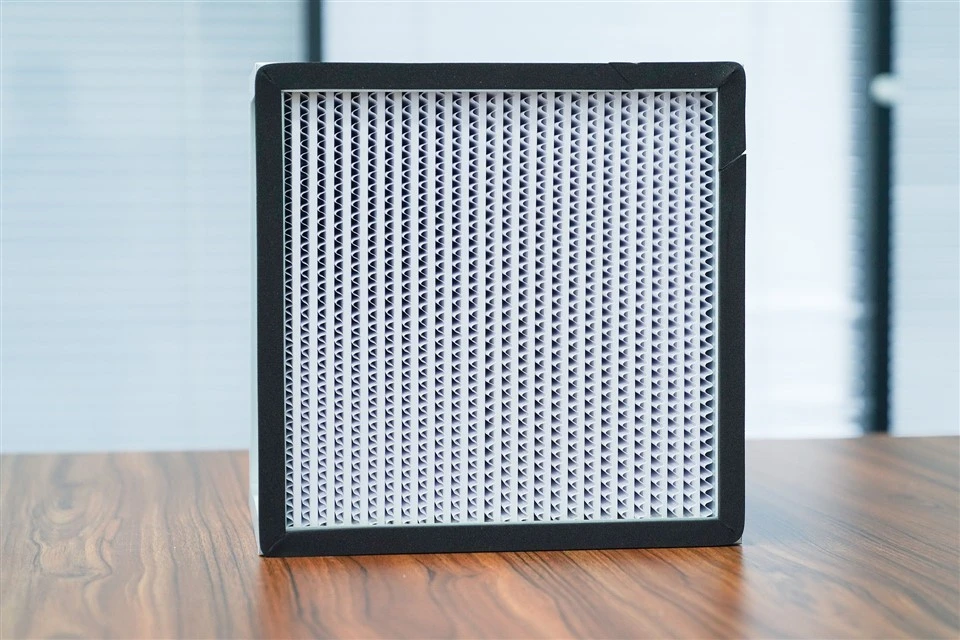
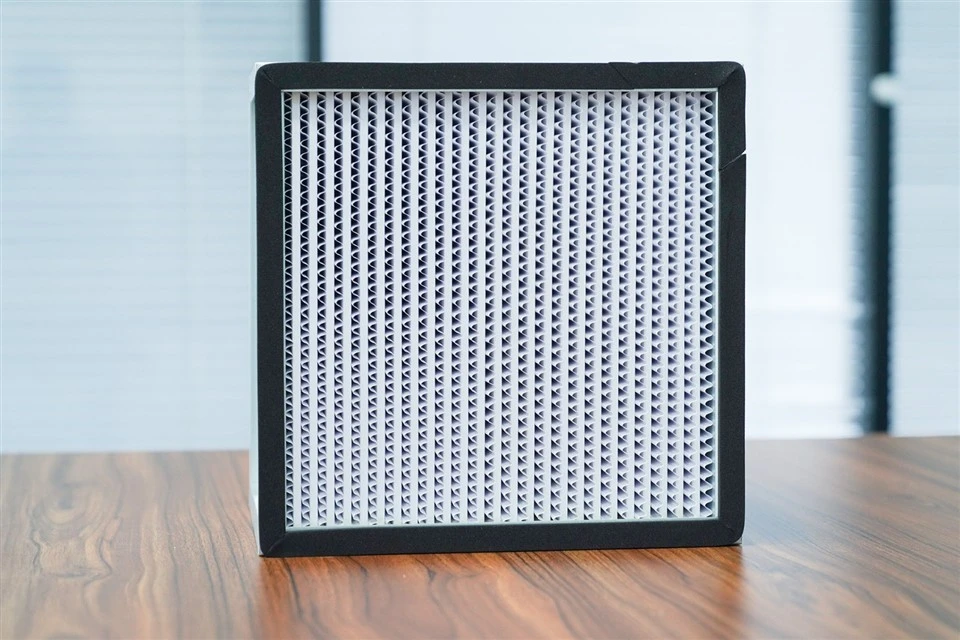
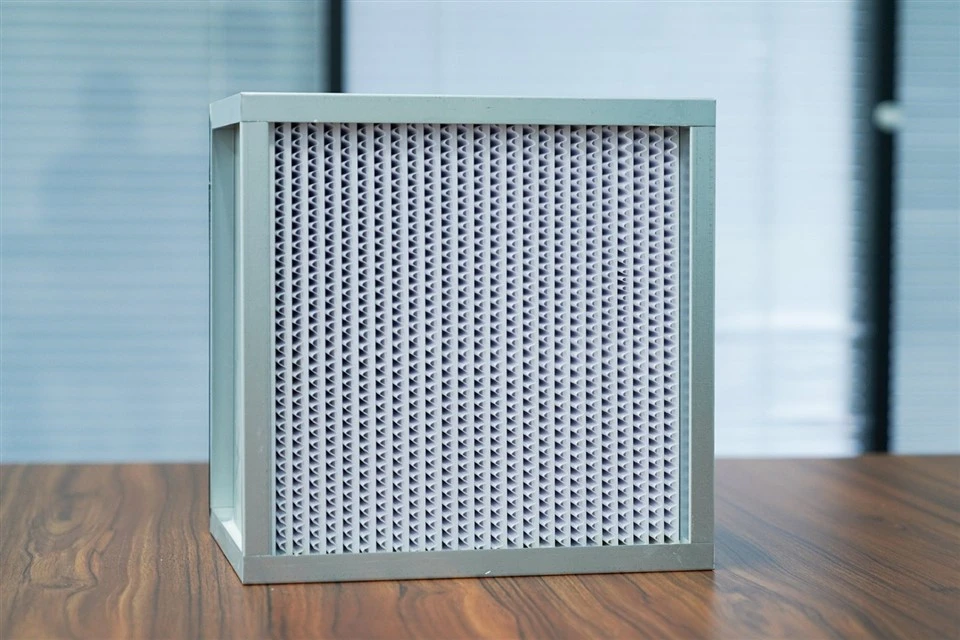
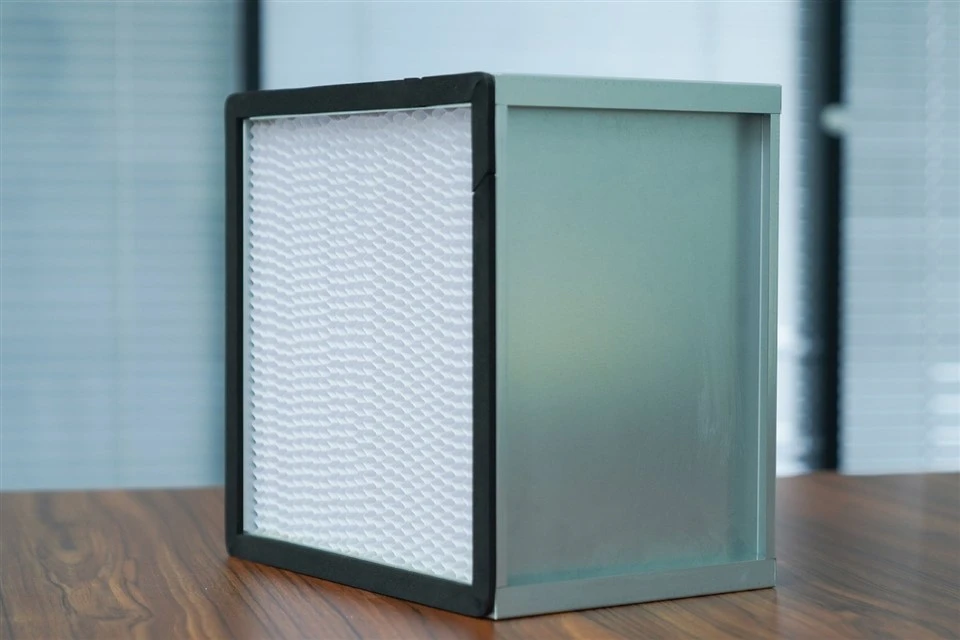
The High-Efficiency Separator HEPA (High-Efficiency Particulate Air with separator) filter is a precision air filtration device specifically designed for laboratories and the pharmaceutical industry. Its core function is to achieve a filtration efficiency of 99.97% to 99.995% (with some models reaching 99.9995%) for airborne particles of 0.3 microns and larger, such as bacteria, viruses, dust, and aerosols, through physical interception, diffusion capture, and inertial collision mechanisms. The filter employs a separator structure (e.g., aluminum foil or hot-melt adhesive spacers) to optimize airflow distribution, reduce resistance, and ensure long-term stable operation in high-cleanliness environments.
II. Key Technical Characteristics
1. High-Efficiency Filtration Performance
Classification Standards: Compliant with EN 1822 or ISO 29463 standards, classified as H13 (≥99.95%) and H14 (≥99.995%). Some models (e.g., ULPA) achieve 99.9995% efficiency for 0.12-micron particles.
Testing and Validation: Passes DOP/PAO scan leak tests to ensure compliance with filtration efficiency standards and eliminate leakage risks.
2. Separator Structure Design
Aluminum Foil or Hot-Melt Adhesive Spacers: Reduces airflow bypass between filter media, increases filtration area by 30%–50% compared to separator-free models, and extends service life (typically 1–3 years, depending on environmental load).
Low-Resistance Design: Optimizes airflow distribution with an initial resistance as low as 100–235 Pa, reducing energy consumption and suitable for high-airflow applications.
3. High-Temperature and Corrosion-Resistant Performance
High-Temperature Models: Utilizes glass fiber filter media and stainless steel frames for stable operation at 250–260°C, ideal for sterilization cabinets, drying ovens, and other high-temperature purification equipment.
Corrosion-Resistant Options: PTFE filter membranes or special coatings for adaptation to high-humidity or corrosive gas environments (e.g., chemical laboratories, pharmaceutical process exhaust).
4. Sealing and Structural Reliability
Liquid Trough Sealing Technology: Uses polyurethane or silicone seals to ensure leak-free connections and eliminate particulate shedding risks associated with traditional mechanical seals.
Frame Materials: Optional galvanized steel, aluminum alloy, or stainless steel to meet diverse environmental requirements (e.g., explosion-proof, corrosion-resistant).
III. Core Applications in Laboratories and Pharmaceutical Industries
1. Cleanrooms and Sterile Environments
Biosafety Laboratories: Filters airborne pathogens (e.g., bacteria, viruses) to protect personnel safety and reduce cross-contamination risks.
Pharmaceutical GMP Facilities: Ensures production areas meet ISO Class 5–7 cleanliness standards, complying with Good Manufacturing Practice (GMP) requirements.
2. Localized Purification Equipment
Laminar Flow Transfer Windows: Reduces particulate contamination risks during opening/closing by over 83% using HEPA filtration and air curtain isolation (e.g., Zhongke Shengjie's laminar flow transfer window achieves a 0.02/1000-operation cross-contamination probability).
Biosafety Cabinets: Provides a sterile operating environment to protect samples from contamination while preventing hazardous aerosol leakage.
3. High-Temperature Sterilization and Process Exhaust
Sterilization Cabinets and Drying Ovens: High-temperature HEPA filters maintain ≥99.995% filtration efficiency at 250°C, ensuring air sterility post-sterilization.
Process Exhaust Treatment: Filters volatile organic compounds (VOCs) or dust in pharmaceutical production to prevent environmental pollution.
IV. Typical Application Scenarios and Performance Requirements
| Industry | Application Scenarios | Performance Requirements |
|---|---|---|
| Pharmaceutical Industry | GMP facilities, aseptic filling lines | H14-grade HEPA, ≥99.995% efficiency, high-temperature/corrosion-resistant options, compliant with FDA/EU GMP standards. |
| Biological Laboratories | Cell culture, PCR labs | H13-grade HEPA + UV sterilization, ≥99.999% aerosol filtration efficiency, low-leakage design. |
| Chemical Laboratories | Fume hood exhaust, glove boxes | PTFE filter membrane or corrosion-resistant coating, ≥99.97% efficiency, adaptable to high-humidity or corrosive gas environments. |
| Medical Device Production | Implant cleaning, packaging areas | ULPA-grade filter, ≥99.9995% efficiency for 0.12-micron particles, ensuring product sterility. |
V. Selection and Maintenance Guidelines
1. Selection Principles
Cleanliness Class: ISO Class 5 environments require H14-grade HEPA; Class 7 may use H13-grade.
Environmental Load: High particulate concentration environments (e.g., metalworking shops) necessitate high-airflow, high-dust-capacity models.
Compatibility Verification: Ensure filter dimensions and interface types match laminar flow systems to avoid leakage risks.
2. Maintenance Protocols
Regular Testing: Conduct scan leak tests (e.g., DOP/PAO) every 6–12 months to verify filtration efficiency compliance.
Replacement Criteria: Immediate replacement is required when pressure differential doubles the initial value or filtration efficiency drops below 95% of the nominal value.
Disposal Procedures: Biologically contaminated HEPA filters must be incinerated at high temperatures per medical waste disposal regulations.
VI. Technological Development Trends
Smart Integration: Incorporates IoT technology for filter lifespan monitoring, differential pressure alerts, and remote maintenance to reduce operational costs.
Low-Resistance Design: Optimizes filter media structure and airflow distribution to cut energy consumption (some new HEPA models reduce resistance by 30% compared to traditional designs).
Modular Expansion: Develops quickly replaceable filter modules to minimize downtime (e.g., one brand achieves filter replacement in <5 minutes).
Hybrid Functions: Integrates ultraviolet (UV-C) or vaporized hydrogen peroxide (VHP) sterilization modules for dual "filtration + sterilization" protection in high-risk environments.
Hot Tags: high-efficiency separator hepa filter for laboratories and pharmaceutical industries, China high-efficiency separator hepa filter for laboratories and pharmaceutical industries manufacturers, suppliers, factory, automotive air filter, Combine High Efficiency Air Filter, dust air filter, import air filters, purchase air filters, wholesale air filters