


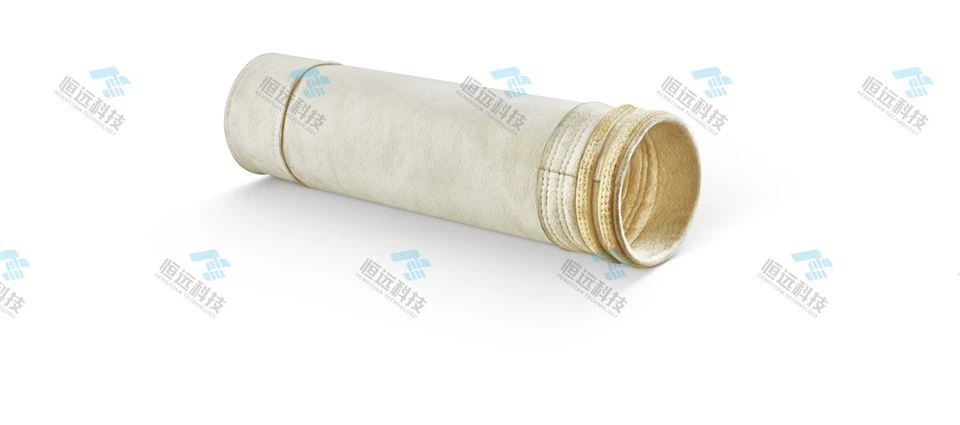
The filtration principle of glass fiber needle-punched filter materials is primarily based on the following aspects:
Interception Effect
Particle Size Interception: During filtration, as the dust-laden airflow reaches the fiber layer, its velocity decreases. Most fine dust particles pass through the gaps between fibers. However, particles with diameters larger than or equal to the distance between the edges of two fibers are intercepted and retained by the fibers. This interception effect is closely related to the particle size of the filtered particles.
Fiber Arrangement: Reinforced through needle-punching, glass fiber felt exhibits a three-dimensional network of fibers within the web, increasing the contact area between fibers and enhancing interception efficiency.
Inertia, Gravity, and Brownian Motion
Inertia: Larger dust particles, due to their significant inertia, tend to deviate from the airflow's streamline when moving with the air, collide with fibers, and are captured.
Gravity Settling: Heavier dust particles naturally settle onto the filter material under the influence of gravity.
Brownian Motion: Microscopic dust particles undergo Brownian motion due to molecular thermal motion in the airflow, increasing their chances of collision with fibers and subsequent capture.
Membrane Filtration
Membrane Material: Glass fiber needle-punched felt membrane filter materials are composed of a layer of polytetrafluoroethylene (PTFE) film laminated onto the surface of the glass fiber base cloth. The PTFE film boasts a smooth surface, chemical resistance, exceptional chemical stability, and hydrophobicity.
Filtration Efficiency: With pore sizes ranging from 0.2 to 3 μm, membrane filter media can achieve filtration efficiencies exceeding 99.99%, nearly achieving zero emissions. Moreover, the smooth film surface facilitates easy detachment of dust retained on it, enhancing the filter media's service life.
Pressure Loss: While membrane filter media initially exhibit higher pressure losses than conventional filter media, their pressure losses remain relatively stable over time, whereas those of conventional filters increase significantly with prolonged use.
Fine Denier Fiber Effect
Fiber Linear Density: A smaller fiber linear density results in an increased specific surface area of the filter fiber, enhancing collision opportunities, particle capture capacity, and thus filtration efficiency.
Pore Structure: Fine denier fiber filter media exhibit increased tortuosity in their internal pore structures, making inner-layer filtration more effective.
In summary, the filtration principle of glass fiber needle-punched filter materials stems from the combined effects of multiple factors, including interception, inertia, gravity, Brownian motion, membrane filtration, and the fine denier fiber effect. These factors work synergistically to ensure the high-efficiency filtration performance of glass fiber needle-punched filter materials.
Hot Tags: special glass fiber needled filter material for chemical plants, China special glass fiber needled filter material for chemical plants manufacturers, suppliers, factory, RFA Series Direct Back Return Line Filter, HNWn600 Glass Fiber Needle Punched Filter Material, Air Compressor Oil Water Separator Filter, Air Filters, Fuel Oil Suction Filter, RF Series Direct Back Return Line Filter