


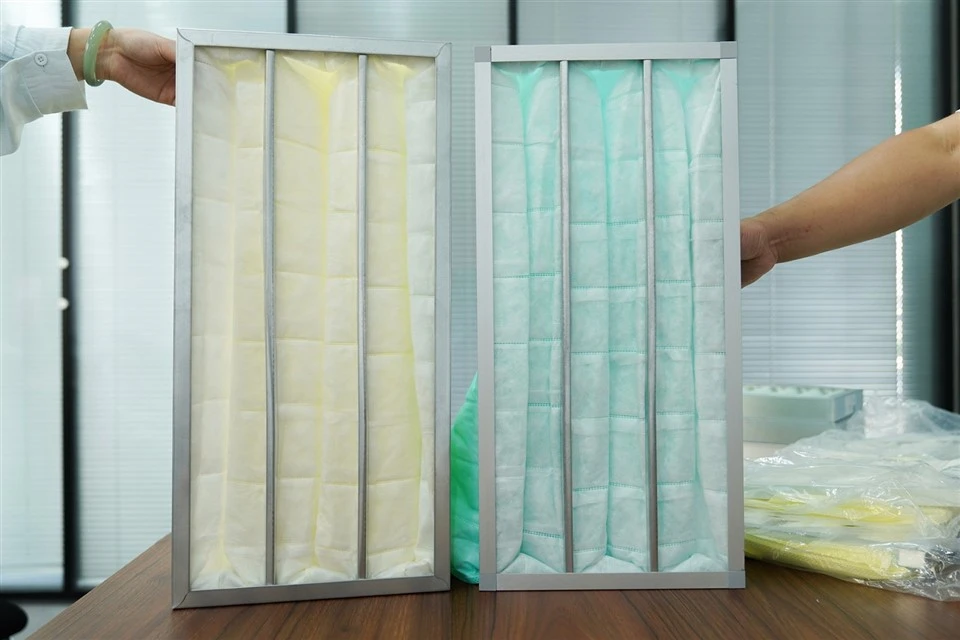

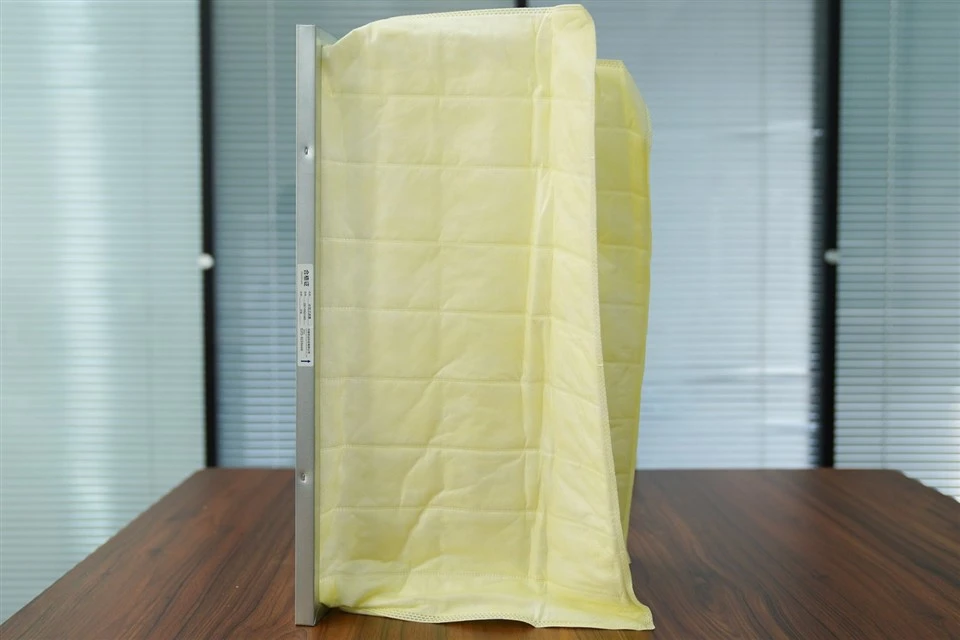
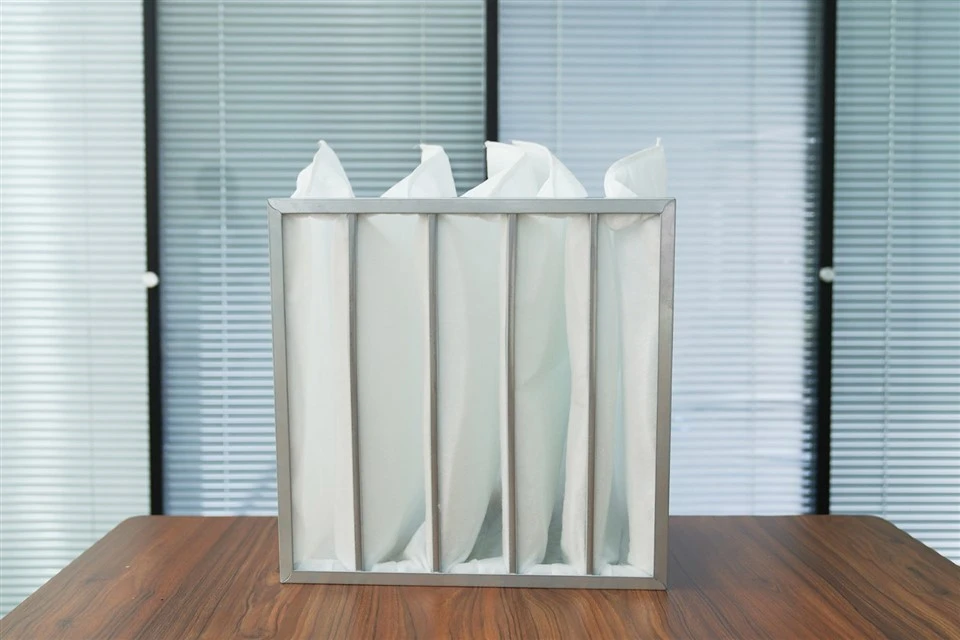
An Air Conditioning Pocket Filter and a Dust Collector Synthetic Bag Air Filter are both filtration solutions used in HVAC and industrial systems, but they differ in design, application, and performance. Below is a detailed comparison and explanation of each:
1. Air Conditioning Pocket Filter
Overview
Design: Consists of multiple fabric pockets (usually 5–12) arranged vertically in a frame.
Material: Synthetic media (polyester, polypropylene, or nanofiber) for durability and efficiency.
Function: Used in HVAC systems to capture dust, pollen, and fine particles from supply or return air.
Key Features
High Surface Area: The pocket design increases filtration area, reducing pressure drop.
Efficiency Range: MERV 8–13 (ASHRAE 52.2) or Eurovent Class M5–F7 (EN 779).
Low Maintenance: Replaceable pockets extend filter life compared to flat-panel filters.
Compact Size: Fits standard HVAC filter racks, saving space.
Applications
Commercial Buildings: Offices, hospitals, schools, and malls for indoor air quality (IAQ) control.
Industrial HVAC: Cleanrooms, pharmaceuticals, and food processing facilities requiring clean air.
Pre-Filtration: Used upstream of HEPA filters to protect them from large particles.
Advantages
Energy Efficiency: Low pressure drop reduces fan energy consumption.
Cost-Effective: Longer lifespan than disposable panel filters.
Flexibility: Available in various sizes and efficiency ratings.
Disadvantages
Not for Heavy Dust: Not suitable for high-dust environments (e.g., woodworking, metalworking).
Limited Water Resistance: Some synthetic media may degrade if exposed to moisture.
2. Dust Collector Synthetic Bag Air Filter
Overview
Design: Cylindrical or envelope-shaped bags made of synthetic fabric (e.g., polyester, aramid, or PTFE).
Function: Used in industrial dust collectors to capture coarse to fine particulates from process air.
Key Features
High Dust Holding Capacity: Designed for heavy-duty applications with high particulate loads.
Efficiency Range: MERV 11–16 or equivalent (e.g., M6–F9 in EN 779).
Durability: Synthetic materials resist abrasion, chemicals, and high temperatures.
Pulse Cleaning: Compatible with reverse-pulse cleaning systems for regenerative use.
Applications
Manufacturing: Metalworking, woodworking, cement, and chemical processing.
Power Generation: Coal-fired plants, biomass boilers, and incinerators.
Pharmaceuticals: Capturing active pharmaceutical ingredients (APIs) during production.
Advantages
Heavy-Duty Performance: Handles large volumes of dust without clogging.
Long Lifespan: Synthetic media withstands harsh conditions better than natural fibers (e.g., cotton).
Low Emissions: High-efficiency variants (e.g., F9) meet strict environmental regulations.
Disadvantages
Higher Initial Cost: More expensive than panel or pocket filters.
Space Requirements: Baghouse collectors need more room than cartridge or pleated filters.
3. Comparison Table
| Feature | Air Conditioning Pocket Filter | Dust Collector Synthetic Bag Filter |
|---|---|---|
| Design | Vertical pockets in a frame | Cylindrical/envelope bags |
| Primary Use | HVAC systems (commercial/industrial) | Industrial dust collection |
| Efficiency | MERV 8–13 (M5–F7) | MERV 11–16 (M6–F9) |
| Dust Load Capacity | Low to moderate | High (heavy-duty) |
| Cleaning Method | Disposable/replaceable pockets | Pulse-jet cleaning (regenerative) |
| Material | Synthetic (polyester, nanofiber) | Synthetic (polyester, aramid, PTFE) |
| Cost | Moderate | High (initial cost, but long lifespan) |
| Best For | Clean air in buildings | Capturing large volumes of industrial dust |
4. How to Choose Between Them?
For HVAC Systems:
Use pocket filters if you need compact, energy-efficient filtration for general air quality.
Opt for bag filters only if the system handles high dust loads (rare in standard HVAC).
For Industrial Dust Collection:
Use synthetic bag filters for heavy-duty applications (e.g., welding fumes, cement dust).
Consider cartridge filters if space is limited or for finer particulates (e.g., laser cutting).
5. Maintenance Tips
Pocket Filters
Replace when pressure drop exceeds manufacturer recommendations (typically 1–2" WG).
Avoid washing; synthetic media may degrade.
Synthetic Bag Filters
Monitor differential pressure and clean with pulse-jet systems as needed.
Replace bags if they show signs of wear (tears, holes, or excessive stretching).
Hot Tags: air conditioning pocket filter dust collector synthetic bag air filter, China air conditioning pocket filter dust collector synthetic bag air filter manufacturers, suppliers, factory, air filter for compressors, air filtration system, disposable air filter, hepa air filter, industrial air filter, purchase air filters