

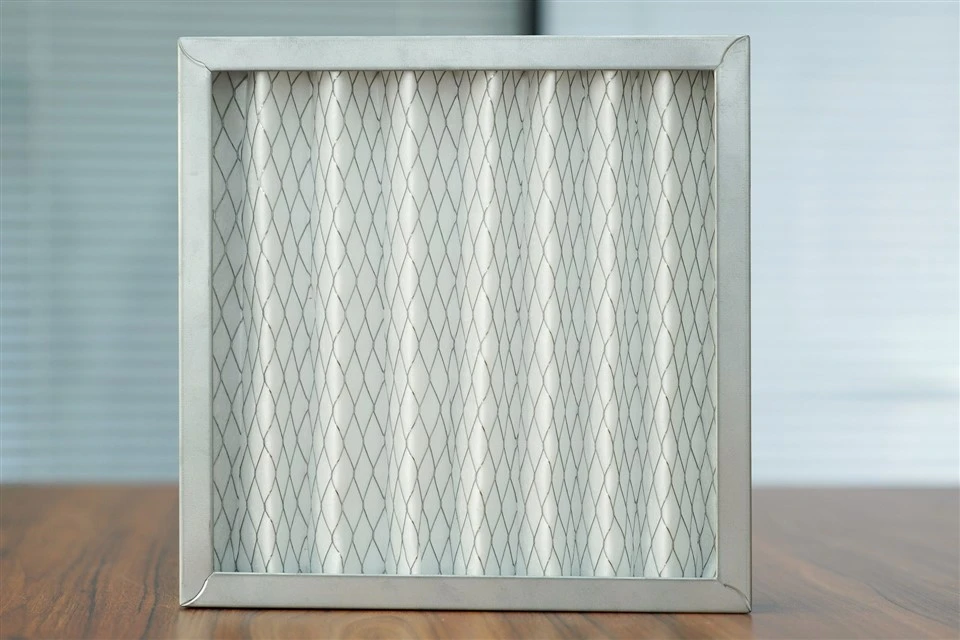

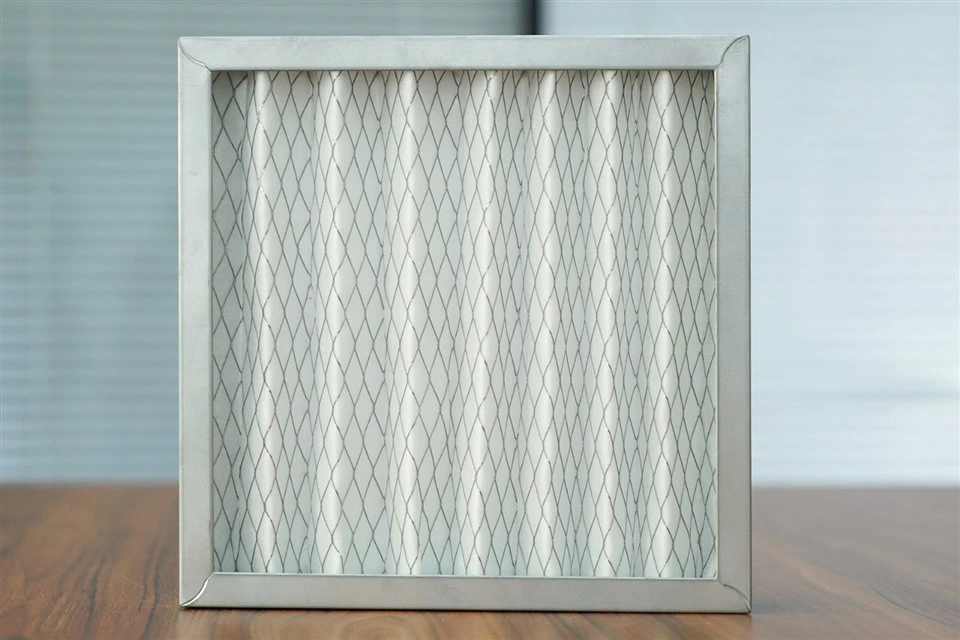
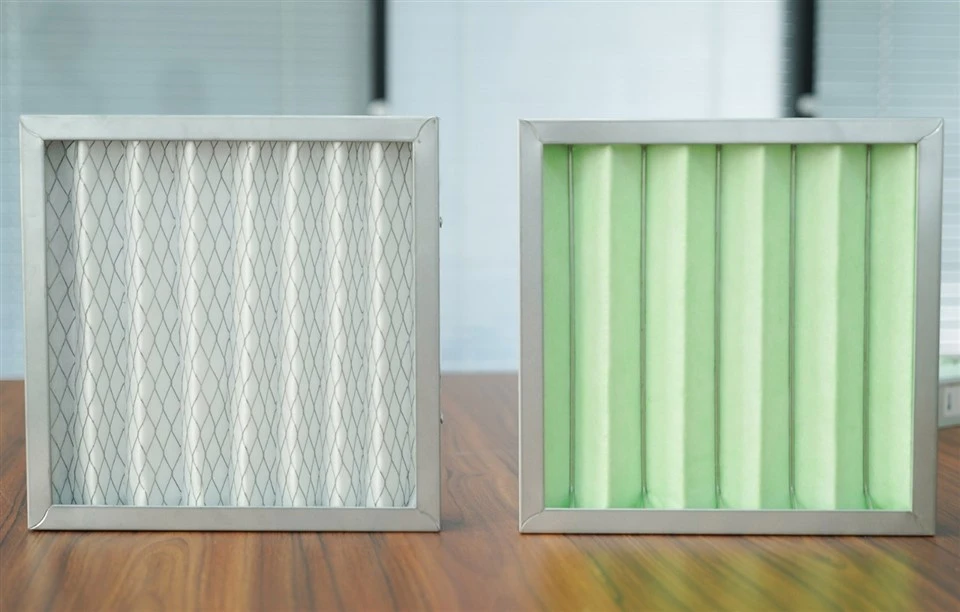
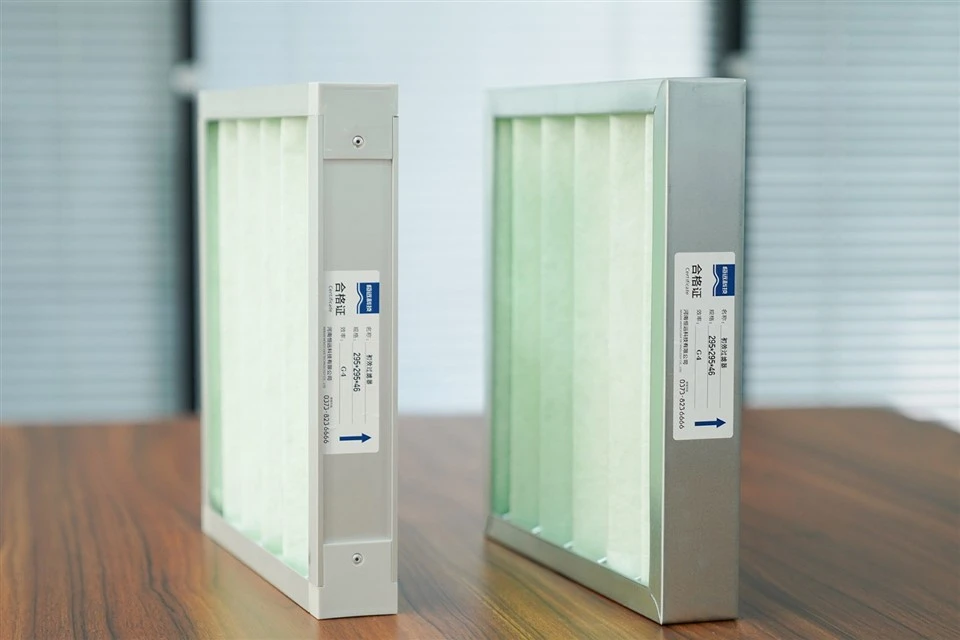
For clean room return air filtration, a primary air filter with a large filtration area, low resistance, and high dust-holding capacity is essential to maintain air quality while optimizing energy efficiency and reducing maintenance frequency. Below is a detailed breakdown of the key features, benefits, and selection criteria for such filters:
1. Key Features of an Ideal Primary Air Filter for Clean Room Return Air
A. Large Filtration Area
Pleated Design: Uses deep-pleated media (e.g., synthetic fiber, glass fiber) to maximize surface area in a compact frame.
V-Shape or Mini-Pleat Configuration: Enhances dust capture efficiency and extends service life.
High Media Density: More filter material per unit volume increases contact time with pollutants.
B. Low Resistance (Pressure Drop)
Optimized Airflow Path: The pleated structure reduces turbulence, minimizing pressure drop across the filter.
Low-Density Media: Balances filtration efficiency with airflow resistance (e.g., MERV 8–11 filters).
Gradient Density Layers: Coarser pre-filtration layers trap larger particles, protecting finer downstream filters and reducing overall resistance.
C. High Dust-Holding Capacity
Thick Media Pack: More material to trap particles before clogging (e.g., 50–100 mm depth).
Electrostatic Charging: Some media (e.g., synthetic fibers) are electrostatically charged to attract and hold dust efficiently.
Sturdy Frame Construction: Prevents media sagging or bypass, ensuring consistent dust capture.
2. Benefits for Clean Room Return Air Systems
Energy Efficiency: Low resistance reduces HVAC fan energy consumption by up to 30%.
Longer Filter Life: High dust capacity extends replacement intervals, cutting maintenance costs.
Consistent Air Quality: Prevents premature clogging, ensuring stable performance in critical environments.
Cost-Effectiveness: Balances initial cost with long-term savings on energy and labor.
3. Technical Specifications
| Parameter | Typical Range |
|---|---|
| Filtration Efficiency | MERV 8–11 (ASHRAE 52.2) |
| Initial Pressure Drop | ≤0.5" WG (125 Pa) at rated flow |
| Dust Capacity | 100–300 g/m² (depending on media) |
| Operating Temp | -4°F to 140°F (-20°C to 60°C) |
| Humidity Tolerance | Up to 95% RH (non-condensing) |
| Frame Material | Galvanized steel, aluminum, or moisture-resistant cardboard |
4. Recommended Filter Types
A. Box Filters (Panel Filters)
Best For: Low-to-medium dust loads in clean room return air.
Features:
Pleated synthetic or glass fiber media.
Lightweight and easy to install.
MERV 8–10 efficiency.
B. V-Bank Filters (Mini-Pleat Filters)
Best For: High airflow systems requiring low resistance.
Features:
V-shaped mini-pleats increase surface area by 50–100% vs. flat panels.
MERV 11–13 efficiency.
Ideal for pre-filtration in clean rooms.
C. Pocket Filters (Bag Filters)
Best For: High dust capacity applications (less common in clean rooms due to higher resistance).
Features:
Multiple fabric pockets trap dust efficiently.
MERV 8–11 efficiency but higher pressure drop than pleated filters.
5. Comparison Table
| Filter Type | Filtration Area | Pressure Drop | Dust Capacity | Cost | Best Use Case |
|---|---|---|---|---|---|
| Box Filter | Moderate | Low | Moderate | Low | General clean room return air |
| V-Bank Filter | High | Very Low | High | Medium | High-efficiency pre-filtration |
| Pocket Filter | High | Moderate-High | Very High | Low | Industrial dust-heavy environments |
6. Selection Criteria
Clean Room Class: Higher classes (ISO 5–7) may require MERV 11+ pre-filters.
Airflow Rate: Ensure the filter can handle the required CFM (cubic feet per minute) without excessive pressure drop.
Pollutant Type: Choose media resistant to moisture, chemicals, or corrosive particles if applicable.
Maintenance Schedule: High dust capacity filters reduce replacement frequency, critical for 24/7 operations.
Certifications: Look for ISO 14644, ASHRAE, or Eurovent certifications for quality assurance.
7. Installation & Maintenance Tips
Seal Properly: Use gaskets or gel seals to prevent air bypass.
Monitor Pressure Drop: Install differential pressure gauges to track filter clogging.
Replace Before Clogging: Aim for a pressure drop increase of ≤1.0" WG (250 Pa) before replacement.
Recycle Used Filters: Partner with suppliers for eco-friendly disposal (e.g., incineration for activated carbon filters).
8. Conclusion
For clean room return air filtration, a primary air filter with a large filtration area, low resistance, and high dust capacity ensures optimal performance, energy savings, and minimal downtime. V-bank filters are often the best choice for their balance of efficiency and longevity, but box filters may suffice for less demanding environments. Always consult with HVAC engineers or filter manufacturers to select the right model for your specific clean room class and operational needs.
Hot Tags: primary air filter clean room return air filtration large filtration area, low resistance, large dust capacity., China primary air filter clean room return air filtration large filtration area, low resistance, large dust capacity. manufacturers, suppliers, factory, air filter cartridge, air filter replacement, engine air filter, purchase air filters, residential air filter, smoke air filter