

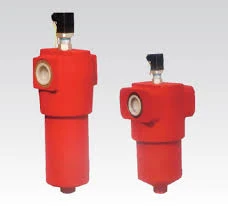
High-pressure filters are filtration equipment specifically designed for high-pressure fluid systems, widely used in the petroleum, chemical, metallurgical, power, and heavy industries, among others. Below is a detailed introduction to high-pressure filters:
I. Definition and Uses
High-pressure filters are primarily used to remove solid and liquid impurities from high-pressure fluids (such as compressed air, high-pressure hydraulic fluids, etc.), ensuring fluid cleanliness and stable system operation. They are widely applied in hydraulic systems, high-pressure piping systems, and industrial settings requiring high-pressure fluid transmission.
II. Working Principle
The working principle of high-pressure filters is primarily based on the interception effect of the filter medium and pressure differential control. Specifically, high-pressure fluid enters the filter through the inlet, passes through the micropores in the filter element for filtration, and the cleaned fluid exits through the outlet. Intercepted impurities and particles accumulate within the filter element. When the accumulation of impurities reaches a certain level, the drain valve needs to be opened to discharge them, ensuring the continuous and effective operation of the filter.
During the filtration process, a film layer gradually forms on the surface of the filter medium, hindering the fluid's flow rate, thereby creating a pressure differential between the inlet and outlet. High-pressure filters utilize this pressure differential principle to maintain a constant fluid flow rate through the filter medium by controlling the pressure differential, ensuring filtration efficiency and stability.
III. Structure and Materials
High-pressure filters mainly consist of a filter housing, filter element, inlet and outlet pipes, and a drain valve. The filter housing is typically made of high-strength aluminum alloy or stainless steel to withstand the working pressure in high-pressure environments. The filter element, the core component, directly influences filtration efficiency, with common materials including stainless steel, ceramics, and fibers, renowned for their high temperature resistance, corrosion resistance, and wear resistance.
IV. Features and Advantages
- Efficient Filtration: High-quality filter media and rational structural design ensure efficient removal of tiny particles and suspended matter from fluids, maintaining fluid cleanliness.
- Strong Pressure Resistance: Constructed with high-strength materials and special designs, they can withstand high-pressure environments, guaranteeing equipment safety.
- Excellent Stability: Carefully designed structures and processes ensure stable performance under high-pressure operating conditions.
- Easy Maintenance: Easy to disassemble and clean, with convenient filter element replacement, reducing maintenance costs and time.
V. Application Scenarios
- Power Station Hydraulic Systems: High-pressure filters effectively filter impurities and particles from high-pressure liquids, enhancing system stability and reliability in power station units, machinery, and equipment.
- Petrochemical High-Pressure Piping Systems: Common in the petrochemical industry, high-pressure filters provide reliable protection for these systems, ensuring fluid cleanliness and safety.
- Heavy-Duty Hydraulic Equipment: Essential in heavy machinery and equipment, high-pressure filters safeguard hydraulic system reliability and stability, extending equipment lifespan.
In summary, high-pressure filters play a crucial role in high-pressure fluid systems. Through efficient filtration and stable performance, they ensure fluid cleanliness and system stability, providing reliable support for industrial production.
Hot Tags: high-pressure filters, China high-pressure filters manufacturers, suppliers, factory, Y Type Pipeline Filter, PP Melt Blown Filter Element, High Temerature Resistant Filter, Combine High Efficiency Air Filter, PPS Series Chemical Fiber Filter Material, Gearbox Filter Element Hydraulic Oil Filter