

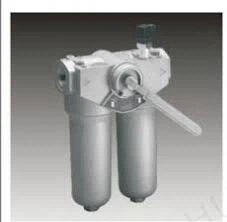
The manufacturing process of a dual-cartridge pipeline filter is a complex one involving multiple steps, primarily encompassing design planning, material preparation, component fabrication, assembly and debugging, final product inspection, and packaging. Below is a detailed overview of this manufacturing process:
I. Design Planning
Needs Analysis: Firstly, a needs analysis is conducted based on specific requirements of the filtration system, such as filtration accuracy, flow rate, working environment, etc.
Structural Design: Based on the needs analysis, the overall structure of the dual-cartridge filter is designed, including the arrangement, connection method, and sealing design of the two filter cartridges.
Material Selection: Suitable materials are chosen based on the working environment and media characteristics, such as stainless steel and carbon steel, to ensure the filter's corrosion resistance and strength.
II. Material Preparation
Raw Material Procurement: High-quality raw materials are procured according to design specifications, including filtration media (e.g., screens, cartridges), cartridge body materials, seals, etc.
Material Inspection: The procured raw materials undergo quality inspection to ensure compliance with design requirements and relevant standards.
III. Component Fabrication
Cartridge Body Fabrication: The cartridge body materials are cut, stamped, welded, and processed according to design dimensions to form the body parts of the dual-cartridge filter.
Filtration Media Installation: Screens or cartridges are installed into the cartridge bodies, ensuring secure and well-sealed installation.
Connector Fabrication/Procurement: Necessary connectors, such as flanges, bolts, and fittings, are manufactured or procured for connecting the various parts of the dual-cartridge filter.
IV. Assembly & Debugging
Component Assembly: The two filter cartridges, connectors, seals, and other components are assembled according to design specifications to form a complete dual-cartridge filter.
Performance Testing: The assembled dual-cartridge filter undergoes performance testing, including filtration accuracy, flow rate, and pressure tests, to ensure it meets design requirements.
Debugging & Optimization: Based on test results, necessary debugging and optimization are performed to enhance filtration efficiency and stability.
V. Final Product Inspection & Packaging
Final Inspection: A comprehensive inspection of the completed dual-cartridge filter is conducted, encompassing aspects such as appearance quality, dimensional accuracy, and performance indicators, to ensure compliance with design requirements and relevant standards.
Packaging & Warehousing: The qualified dual-cartridge filters are packaged to prevent damage during transportation and storage. Packaging materials should offer excellent protection and moisture resistance.
VI. Precautions
Quality Control: Strict quality control measures should be implemented throughout the manufacturing process to ensure the dual-cartridge filter's superior performance and reliability.
Safety & Environmental Protection: Adherence to relevant safety and environmental regulations is mandatory, with necessary precautions taken to minimize environmental impact and personnel hazards.
Technological Innovation: As technology advances, attention should be paid to the application of new technologies and materials in dual-cartridge filter manufacturing to continually improve product performance and manufacturing efficiency.
Please note that the above manufacturing process is a general description, and specific processes may vary according to manufacturers, equipment models, and product requirements. Adjustments and optimizations should be made based on actual production situations.
Hot Tags: dual-cartridge pipeline filter, China dual-cartridge pipeline filter manufacturers, suppliers, factory, PPS Series Chemical Fiber Filter Material, PTFE Needle Punched Filter Material, Microporous PP Folded Filter Element, Melt Filter Element, Glass Fiber Filter, RFA Series Direct Back Return Line Filter